

Nine Operation Items of the Condenser Rubber Ball Cleaning Device, Explained by Jiangsu Peide, a Water Treatment Manufacturer!
To ensure the long-term operation of the condenser rubber ball cleaning device in a stable environment, it is necessary to have a clear understanding of some daily operation items.
Jiangsu Peide, a water treatment manufacturer, will introduce to you the operation items of the condenser rubber ball cleaning device:
1. Smoking and open flames are strictly prohibited within the working range of the condenser rubber ball cleaning device;
2. The connecting pipelines between the ball receiver interface of the ball feeder and the interface of the ball catcher, as well as between the ball feeding interface of the ball feeder and the cooling water inlet pipe, should be as short as possible. The pipelines should be simple, and the number of bends in the pipelines should be reduced. Especially for the ball receiving pipeline, the number of elbows in each pipeline should not exceed 3, in order to reduce the water resistance (it is recommended that the length of the ball receiving pipeline be less than 6 meters.). If the pipeline is too long due to installation location and other reasons, the diameter of the pipeline should be increased by one size.
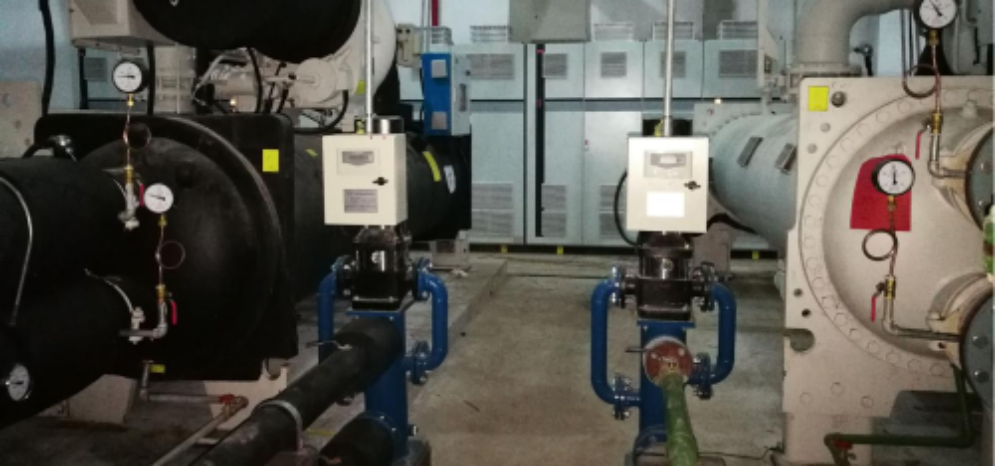
1. For the condenser rubber ball cleaning device, a hole with a diameter of DN50 should be opened at the condenser inlet pipe behind the filter, close to the end cover, and connected to the ball feeding port of the ball feeder. A DN50 full-bore ball valve should be installed on the pipeline, that is, the valve core hole should not be less than Φ50mm. The DN50 full-bore ball valve should be installed as close as possible to the condenser inlet pipe.
2. Install a ball catcher on the condenser outlet pipeline. The ball catcher should be installed as soon as the condenser outlet pipe exits the end cover. The DN50 flange outlet of the ball catcher is connected to the ball receiving port of the ball feeder, and a DN50 full-bore ball valve should be installed on the pipeline, which should be installed as close as possible to the ball catcher.
3. Install a valve behind the ball catcher to facilitate the maintenance of the ball catcher. (If it is a butterfly valve, a short joint should be installed between the ball catcher and the butterfly valve so that the ball catcher can be disassembled and assembled after cutting off the cooling water.)
4. The main unit of the cleaning device should be installed as close as possible to the condenser.
5. For a new system, before the equipment is officially put into use, the entire pipeline system (including the filter) must be flushed and cleaned thoroughly to remove impurities such as welding slag, iron wire, wood chips, plastics, and rust in the pipeline caused during the installation process, and drain all the yellow rust water in the system.
6. For a renovated system, before the equipment is officially put into use, the dirt on the inner wall of the heat exchange tubes needs to be thoroughly cleaned. For the dirt that cannot be cleaned by mechanical brushing, the chemical cleaning method should be adopted first, and then mechanical brushing should be carried out to ensure that the inner wall of the heat exchange tubes is as clean as new.
7. Leave a maintenance space of 0.6 meters around the main unit of the cleaning device.
8. For the rust generated on the inner wall of the circulating water pipe during the non-refrigeration season, when starting the machine again, the filter should be cleaned and inspected to remove impurities and foreign objects.
Jiangsu Peide Water Treatment Equipment Co., Ltd. has been a dedicated developer and manufacturer of physical scale removal equipment for hot water systems and circulating water systems since 2004. It is a well-known brand supplier of physical scale removal equipment for water systems. Welcome to call for consultation.
There are three requirements for ultraviolet sterilizers. Master them and you'll be a sterilization expert!


